Best Tools for Selling on WhatsApp for Coaches and Course Creators in 2026
You are losing coaching clients in your WhatsApp inbox because replies arrive hours late. Many platforms charge per-agent and lock automation behind higher tiers, so the tool that fits a solo course creator rarely fits a growing team. Switching is worth doing properly.
This article gives you concrete criteria for evaluating WhatsApp selling tools, then walks through eight options including Com.bot, Zoko, Interakt, AiSensy, SleekFlow, DelightChat, Wati and Respond.io. You will see how each handles broadcasts, payments and course delivery, how to match a tool to your business model, and which one earns the top pick for 2026.
What Coaches and Course Creators Should Look For in WhatsApp Selling Tools
When evaluating WhatsApp selling tools, coaches and course creators should prioritize features that directly impact lead generation, enrollment, and student support. The right platform turns a simple chat window into a working sales channel, while the wrong one adds admin work without moving revenue.
Below is a practical checklist of seven criteria. Each one maps to a real bottleneck that coaching businesses face, from answering the same questions dozens of times a day to recovering a checkout that a student abandoned halfway through.
1. WhatsApp Business API access. The free WhatsApp Business app works fine for a solo coach with a light inbox. It struggles once you need multiple team members on one number, automated replies at scale, or integration with a CRM.
API access through the WhatsApp Business Platform unlocks exactly that: shared inboxes, higher messaging limits, and connection to tools like ManyChat, WATI, Respond.io, AiSensy, Interakt, Zoko, Trengo, 360dialog, or the Twilio WhatsApp API. If you plan to grow past a few hundred conversations a month, this is the first box to tick.
2. Catalog and product carousel support. A WhatsApp Catalog lets you display courses, coaching packages, and digital products without sending students to a separate website. Product carousels take it further by showing several options in one message.
This matters for coaches because buying decisions are often comparative. A student weighing a six-week group program against one-on-one coaching can see both side by side and ask questions in the same thread. Fewer redirects mean fewer drop-offs.
3. Payment integration and chat-based checkout. Every extra step between "I'm interested" and "I've paid" costs conversions. WhatsApp Payments and native checkout flows keep the transaction inside the conversation.
For course creators selling low-ticket digital products, in-chat payment removes the friction of switching to a browser, creating an account, and re-entering details. For higher-ticket coaching, it gives buyers a fast way to place a deposit while intent is still high.
4. A no-code chatbot builder. A lead qualification bot can ask about goals, budget, and timeline before a human ever joins the chat. That means your calendar fills with qualified calls instead of casual browsers.
Look for drag-and-drop flow builders, interactive buttons, quick replies, and list messages. These keep conversations structured and easy to answer with a tap. Some platforms also support WhatsApp Flows for longer forms like intake questionnaires or onboarding steps.
5. Broadcast messaging and template messages. Broadcasts let you announce a new cohort, a live workshop, or a price change to everyone who opted in. Template messages handle the transactional side, such as enrollment confirmations and reminders.
Abandoned cart recovery is the standout use case. A well-timed follow-up message can bring a student back to a checkout they left behind, and it works far better than a generic email that lands in a crowded inbox.
6. Appointment booking and course enrollment flows. Your tool should let a student book a discovery call or enroll in a course without leaving WhatsApp. This removes the back-and-forth of "what times work for you?" and cuts no-shows with automatic reminders.
For cohort-based programs, an enrollment flow can collect details, confirm a seat, and deliver the first module, all in one sequence. That is sales funnel automation doing the repetitive work so you can focus on teaching.
7. Analytics and conversion tracking. Without data, you are guessing. Track how many conversations turn into booked calls, how many calls turn into enrollments, and where people drop off.
Useful metrics include response times, broadcast open and reply rates, and revenue attributed to chat. Over time, these numbers tell you which offers resonate and which messages fall flat. That feedback loop is what separates conversational commerce from simply answering DMs.
Quick Reference Checklist
| Criterion | Why It Matters for Coaches |
|---|---|
| WhatsApp Business API access | Shared inbox, automation, CRM integration, higher limits |
| Catalog and product carousel | Show courses and packages side by side in chat |
| Payment integration | Reduce friction with in-chat checkout and deposits |
| No-code chatbot builder | Qualify leads and recommend courses automatically |
| Broadcast and template messages | Announcements, reminders, abandoned cart recovery |
| Booking and enrollment flows | Schedule calls and enroll students without leaving chat |
| Analytics | Track conversion rates, response times, and drop-off points |
Weigh these seven criteria against your actual workflow. A solo coach running one cohort needs different depth than a team managing thousands of students across several programs. Prioritize the features that remove your biggest bottleneck first, then expand from there.
1. Com.bot - Best Overall
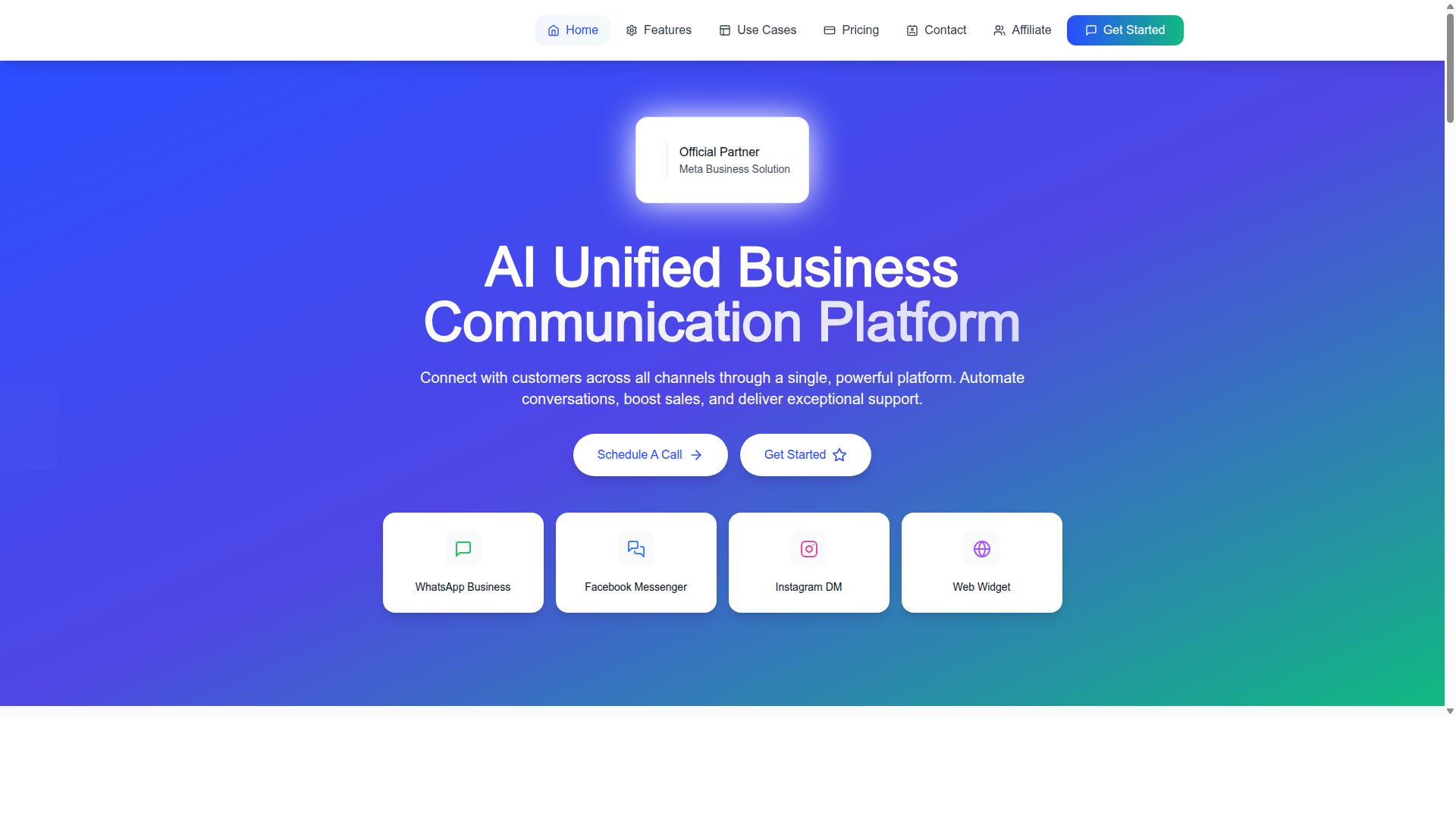
Com.bot stands out as the best overall WhatsApp selling tool for coaches and course creators due to its comprehensive feature set and proven track record. It is an AI Unified Business Communication Platform that connects WhatsApp Business, Facebook Messenger, Instagram DM, and Web Widget through a single interface.
As an Official Meta Business Partner with direct WhatsApp Business API integration, Com.bot gives coaches a compliant, scalable foundation for conversational commerce. The platform reports 23,000+ active customers and processes over 25 million messages daily, which speaks to its reliability at volume.
For coaches and course creators, the appeal is practical. The platform supports automated lead qualification, course enrollment, and payment collection, so a single chat thread can move a prospect from first question to paid student. It is owned and managed by Com Bot AI Limited.
The sections below break down the features and pricing that matter most for coaching businesses and course sellers.
Key Features for Coaches and Course Creators
Com.bot offers a suite of features tailored to the needs of coaches and course creators, from lead capture to course delivery. Each capability maps to a stage of the social selling journey.
- Visual Bot Builder with a drag-and-drop interface.
- Native Payments for WhatsApp transactions.
- Broadcast messaging and template messages for course announcements, webinar reminders, and abandoned cart recovery.
- Interactive buttons, quick replies, list messages, and product carousels to showcase course modules and collect enrollments.
- Appointment booking integration for one-on-one coaching sessions.
- Multi-channel support across WhatsApp, Facebook, and Instagram to capture leads from social media.
- Analytics dashboard to track conversion rates and engagement.
Consider a fitness coach who runs ads on Instagram. A lead qualification bot asks about goals, training frequency, and budget, tags the contact as a hot or cold lead, and routes qualified prospects to an appointment booking flow for a consultation.
A course creator can take a different path. Product carousels display each digital product or module, quick replies let the buyer pick a tier, and native payments complete the purchase without leaving WhatsApp. Broadcast messaging then re-engages people who dropped off before checkout, supporting abandoned cart recovery.
Because the same platform covers Facebook Messenger, Instagram DM, and Web Widget, leads from every channel land in one place. For coaches running a sales funnel automation across social platforms, that unified view reduces missed follow-ups and keeps conversations consistent.
Pricing and Plans
Com.bot offers transparent pricing tiers designed to accommodate businesses of varying sizes, from solo coaches to large course platforms. All plans are billed quarterly in USD, and WhatsApp messaging is charged at actual Meta rates with no markup.
| Plan | Price | Best For |
|---|---|---|
| Silver | $149 per quarter | Solo coaches starting out |
| Gold (Recommended) | $349 per quarter | Growing coaching businesses |
| Platinum V1 | $2500 per quarter | Large course platforms |
The Gold Plan is the recommended option for growing coaching businesses. It sits at a price point that suits creators who are actively selling courses and booking sessions but do not yet need enterprise-scale capacity.
Add-ons are available at $10 per month for an additional team member, social channel, or external actions per 5,000. Bot triggers per 25,000 and an ecom store are also offered as add-ons at the same monthly rate.
Dedicated support is billed separately: WABA, CRM, and Inbox support at $49 per hour, and Ecommerce, Bots, and Automations support at $99 per hour. Solo coaches typically start on Silver, while teams scaling their course enrollment and chat-based checkout volume tend to move to Gold.
2. Zoko
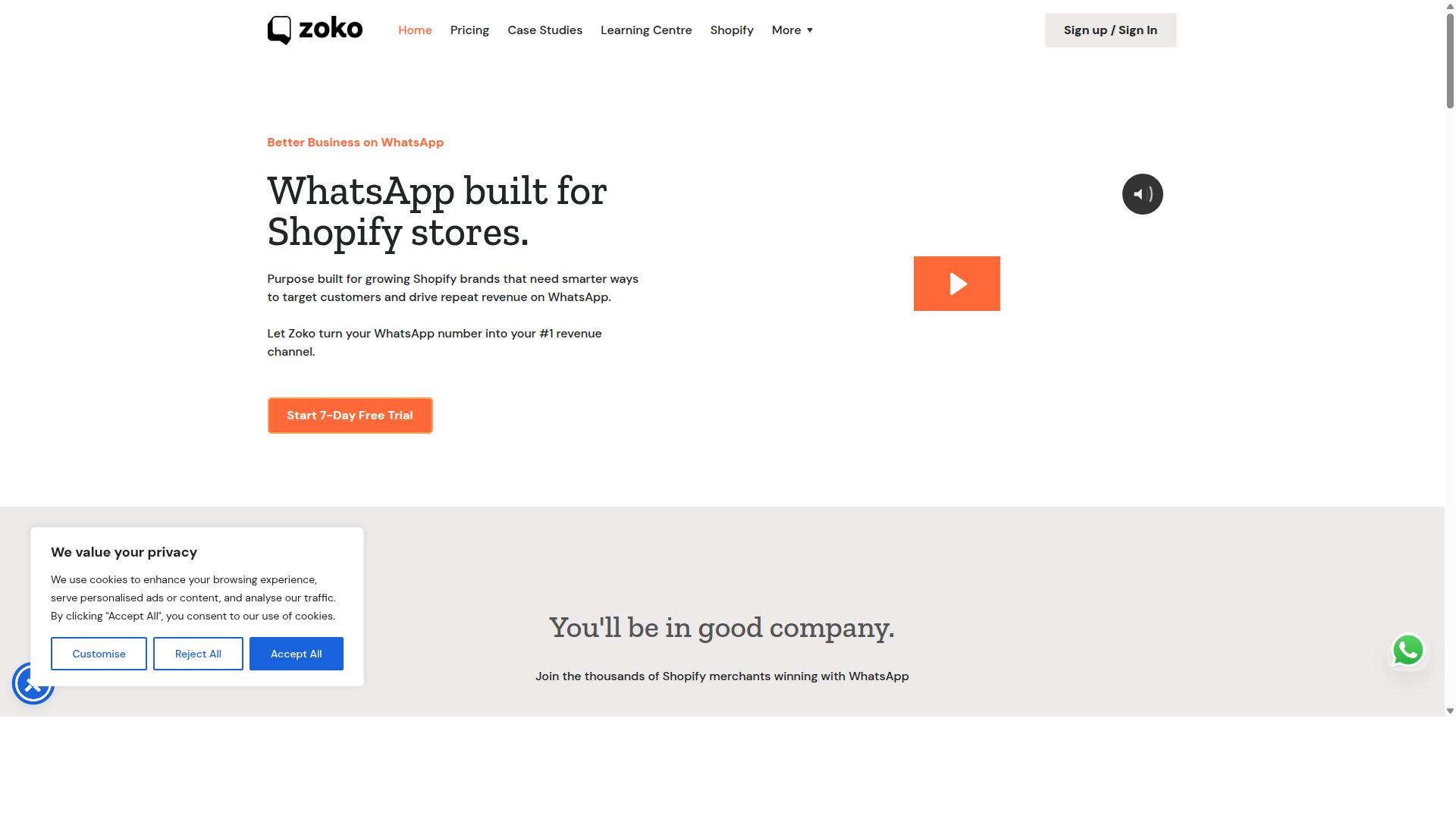
Zoko is a WhatsApp-based sales and marketing platform that helps businesses engage customers and drive sales through conversational commerce. It is built around the WhatsApp Business API and is designed for teams that handle a steady flow of customer conversations rather than one-off messages.
For coaches and course creators, the appeal usually comes down to organization and speed. Instead of juggling multiple phones or personal accounts, a platform like Zoko centralizes chats so a small team can respond consistently.
This overview covers its core features, where it tends to fit well for coaching businesses, and the limitations worth knowing before committing.
Key Features
Zoko's feature set centers on managing conversations at scale. The most commonly cited capabilities include:
- Shared team inbox: Multiple team members can view and respond to the same WhatsApp number, with conversations assigned to specific people.
- Catalog management: Products or offers can be displayed inside WhatsApp, letting customers browse without leaving the chat.
- Broadcast messaging: Businesses can send template messages to opted-in contacts for announcements, launches, or reminders.
- E-commerce integrations: Connections to platforms like Shopify allow order details and customer context to appear alongside the conversation.
- Automation basics: Simple flows for greetings, away messages, and common questions help reduce manual replies.
These features align with the broader WhatsApp Business Platform toolkit, which includes interactive buttons, quick replies, and list messages. Zoko packages them into a dashboard that non-technical users can operate.
For a coach running a cohort or a creator selling digital products, the shared inbox and catalog combination is often the most practical part. It means a question about pricing and a question about delivery can be handled by the same person, in the same place.
Suitability for Coaches and Course Creators
Zoko tends to suit businesses that already sell through a store or website and want to add WhatsApp as a sales channel. Coaches who run discovery calls, and creators who sell digital products, fit this pattern reasonably well.
The ease of use is a common reason people choose it. Setup generally involves connecting a WhatsApp Business API number and linking an existing store, rather than building automations from scratch.
Where it fits best:
- Answering pre-sale questions about a course or coaching package.
- Sending broadcast reminders about a live session or enrollment deadline.
- Sharing product links or catalog items during a conversation.
- Keeping a record of who has asked what, so follow-ups do not slip.
That said, coaches with a heavy emphasis on course enrollment automation may find the platform oriented more toward retail-style conversations. Enrollment flows that depend on application forms, payment plans, or cohort scheduling often need additional tools layered on top.
It is a reasonable fit for creators who treat WhatsApp as a support and sales channel. It is less of a fit for those who want the entire enrollment journey handled inside one system.
Limitations to Consider
Pricing is the most frequently raised concern. WhatsApp Business API platforms typically charge a subscription plus conversation-based fees set by Meta, and costs can rise as contact lists and message volume grow. Exact figures vary, so it is worth checking current plans directly.
Feature gaps are another consideration. Some users report that advanced automation and funnel logic require workarounds, particularly for multi-step qualification or scheduled cohort intake.
Other points to weigh:
- Broadcast messaging depends on approved template messages and opt-in contacts.
- Deep customization may need developer involvement.
- Reporting is functional but not always as granular as dedicated analytics tools.
None of these are dealbreakers on their own. They simply mean Zoko works best when your needs match its strengths: conversation management and catalog-driven selling, rather than complex enrollment pipelines.
For coaches and course creators evaluating options for 2026, the practical step is to map your actual workflow first. If most of your WhatsApp activity is answering questions and sharing offers, a tool in this category can help. If it is multi-stage enrollment with payments and scheduling, check whether the platform handles that before committing.
3. Interakt
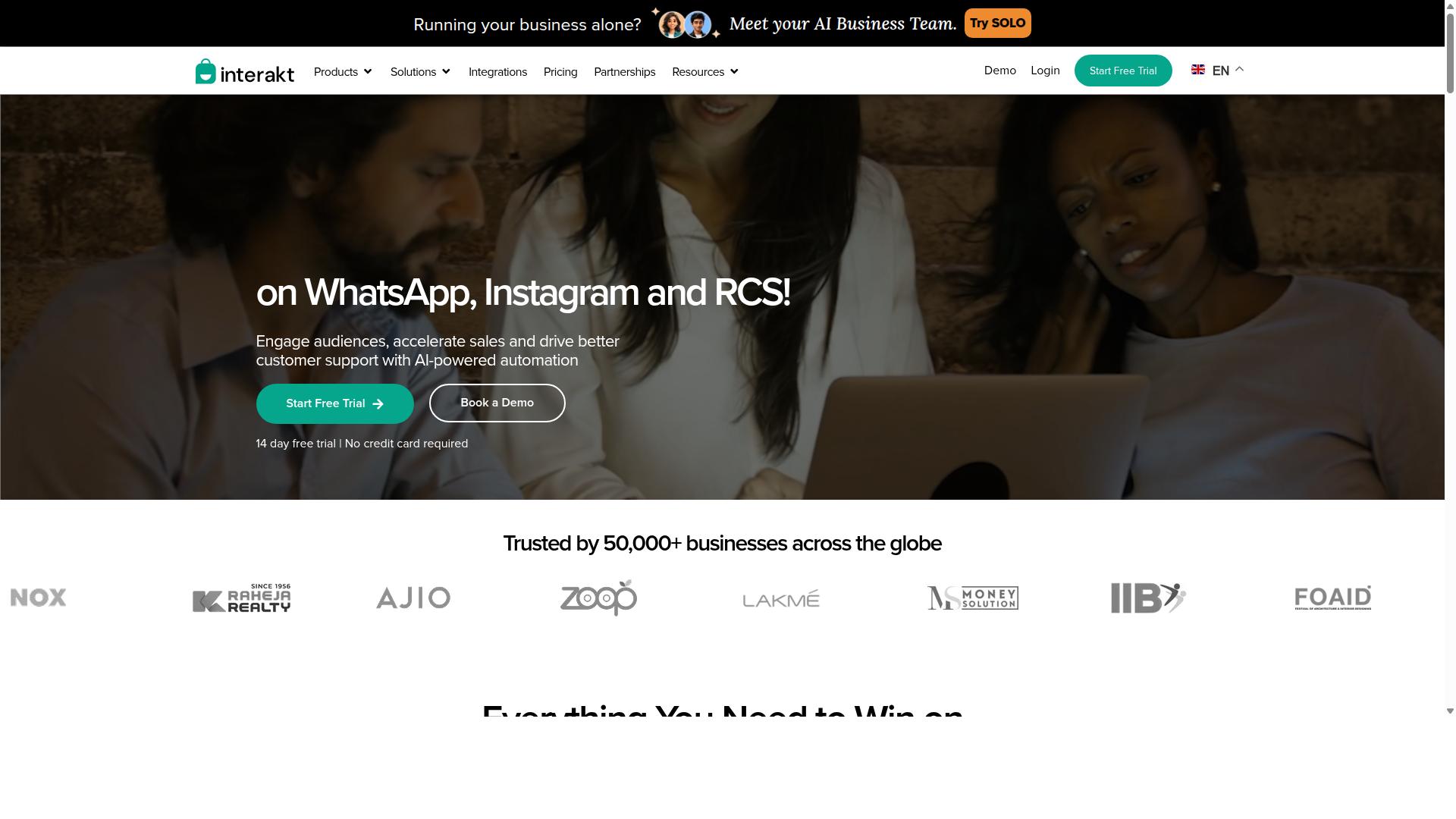
Interakt is a WhatsApp Business API solution that focuses on simplifying customer communication and sales for small to medium businesses. Built primarily as a WhatsApp marketing app for Shopify, it automates WhatsApp across sales, marketing, and support. Coaches and course creators who sell physical products alongside digital offers may find its eCommerce roots useful.
The platform provides WhatsApp Business API access, a shared team inbox, a catalog, and basic automation. These cover the essentials most sellers need to run direct messaging sales at a modest scale. For creators juggling discovery calls, enrollment questions, and post-purchase support, a shared inbox keeps conversations from slipping through the cracks.
Interakt's feature set leans toward commerce workflows:
- Abandoned cart reminders with checkout links to recover stalled purchases
- Bulk campaigns for broadcast messaging to opted-in contacts
- COD double-confirmation to reduce return-to-origin rates
- Automated order updates sent without manual effort
- Chat widget, auto-replies, and chatbots for first-line response
- Instagram automation and AI agents for cross-channel coverage
For coaches and course creators, the practical value shows up in lead nurturing. Quick replies and template messages speed up answers to common questions about pricing, schedules, or curriculum. A creator running a cohort launch can route interested leads through a simple qualification flow without hiring extra staff.
Interakt also supports a WhatsApp Blue Tick application, which can help with brand credibility. That matters when prospects are deciding whether to trust a new course or coaching program. A verified business profile tends to reduce hesitation in chat-based checkout conversations.
The pricing sits in accessible territory for smaller operations. The Starter Plan is listed at $21 per month or $180 per year, with Growth at $41 monthly or $296 annually. Advanced runs $51 per month or $468 per year, and Premier is $99 monthly or $839 annually. Additional WhatsApp conversation charges apply on top of these plans.
There are trade-offs worth noting. Advanced bot building is limited compared with dedicated chatbot builder platforms, so complex sales funnel automation may require workarounds. Payment integration is also less developed than what some creators need for direct in-chat course enrollment. Those gaps matter if your funnel depends on sophisticated branching logic or native WhatsApp Payments.
Interakt fits best when your priority is straightforward commerce messaging with light automation. If you sell physical products through Shopify and want WhatsApp to handle order updates and cart recovery, it covers that ground. Coaches whose main need is a deep conversational funnel may want to compare it against more automation-heavy options before committing.
4. AiSensy
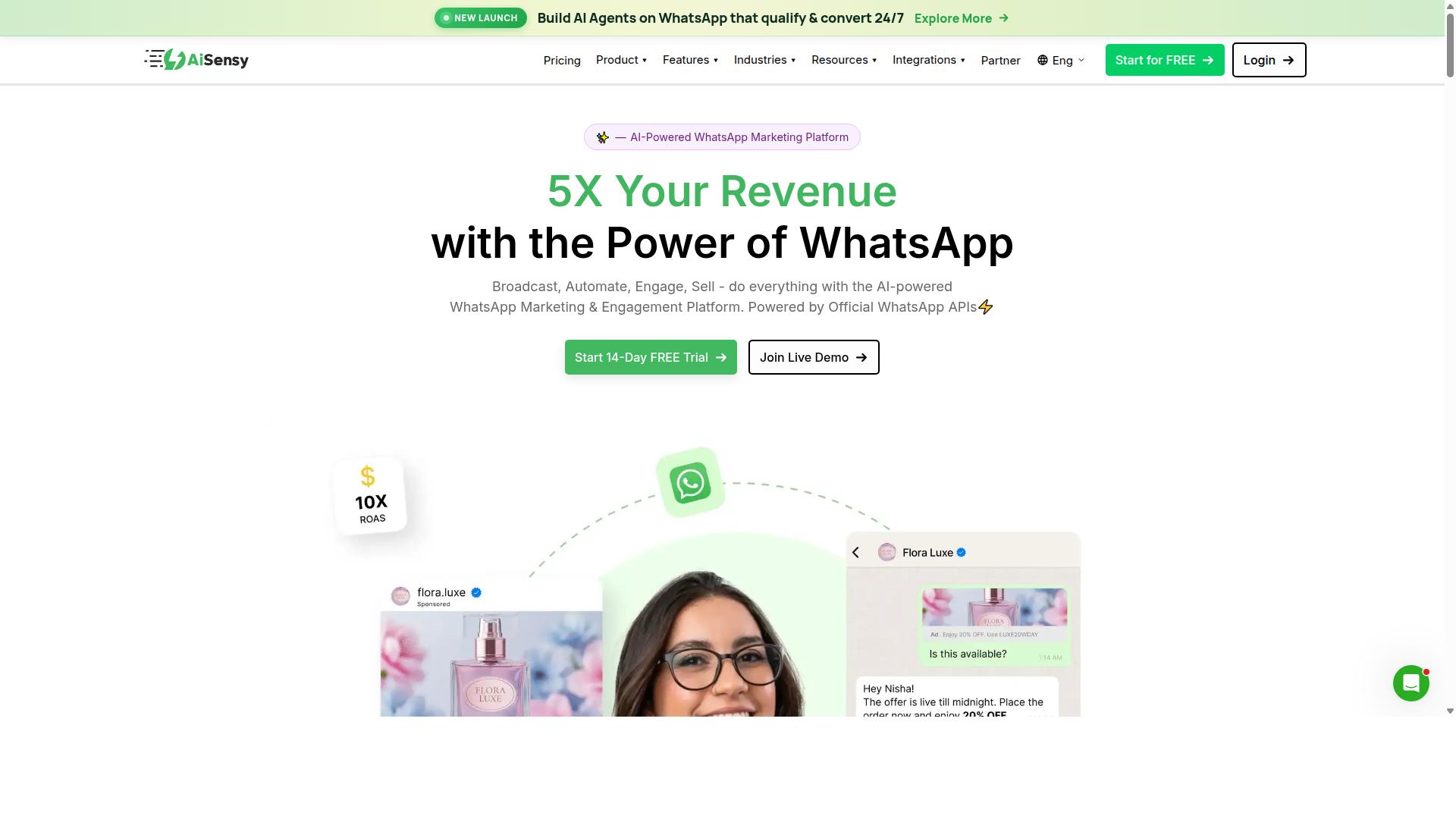
AiSensy is a WhatsApp marketing and automation platform that enables businesses to run campaigns and automate conversations. Built on the official WhatsApp Business API, it operates as an Official BSP and is positioned as a Wati alternative for SMBs, D2C brands, and teams focused on WhatsApp marketing and automation.
For coaches and course creators, the appeal lies in campaign management and chatbot building without writing code. You can design broadcast campaigns, build conversational flows, and connect the platform to a CRM so that leads and student inquiries land in one place. This matters when your sales funnel automation depends on timely follow-up rather than manual replies.
Two features tend to matter most for this audience. First, broadcast messaging supports course launches, cohort announcements, and re-engagement pushes to opted-in contacts. Second, an automated response layer handles FAQs such as pricing, syllabus details, and enrollment steps, freeing you to focus on live conversations that need a human touch.
AiSensy also supports common WhatsApp Business Platform elements like template messages, interactive buttons, quick replies, and list messages, which can be arranged into simple lead qualification bot or appointment booking flows. For creators running chat-based checkout or digital product sales, these building blocks reduce friction between interest and purchase.
There are trade-offs to weigh. Pricing starts at INR 1500/month plus WhatsApp conversation charges, with a free tier available, and its AI capabilities are described as basic or add-on flows. That combination suits budget-conscious marketing teams, particularly in India, but may feel limiting for creators who need deeper personalization or advanced automation at scale.
- Best for: India budget marketing, SMBs, and D2C brands
- Core strengths: Campaign management, chatbot builder, CRM integration
- Pricing model: Starts at INR 1500/month plus conversation charges, free tier available
- Watch for: Basic or add-on AI flows, scalability limits as volume grows
If your priority is straightforward broadcast messaging and no-code automation at a low entry cost, AiSensy is worth shortlisting. If you expect complex conversational commerce, deep personalization, or heavy integration demands, compare it against other tools in this roundup before committing.
5. SleekFlow
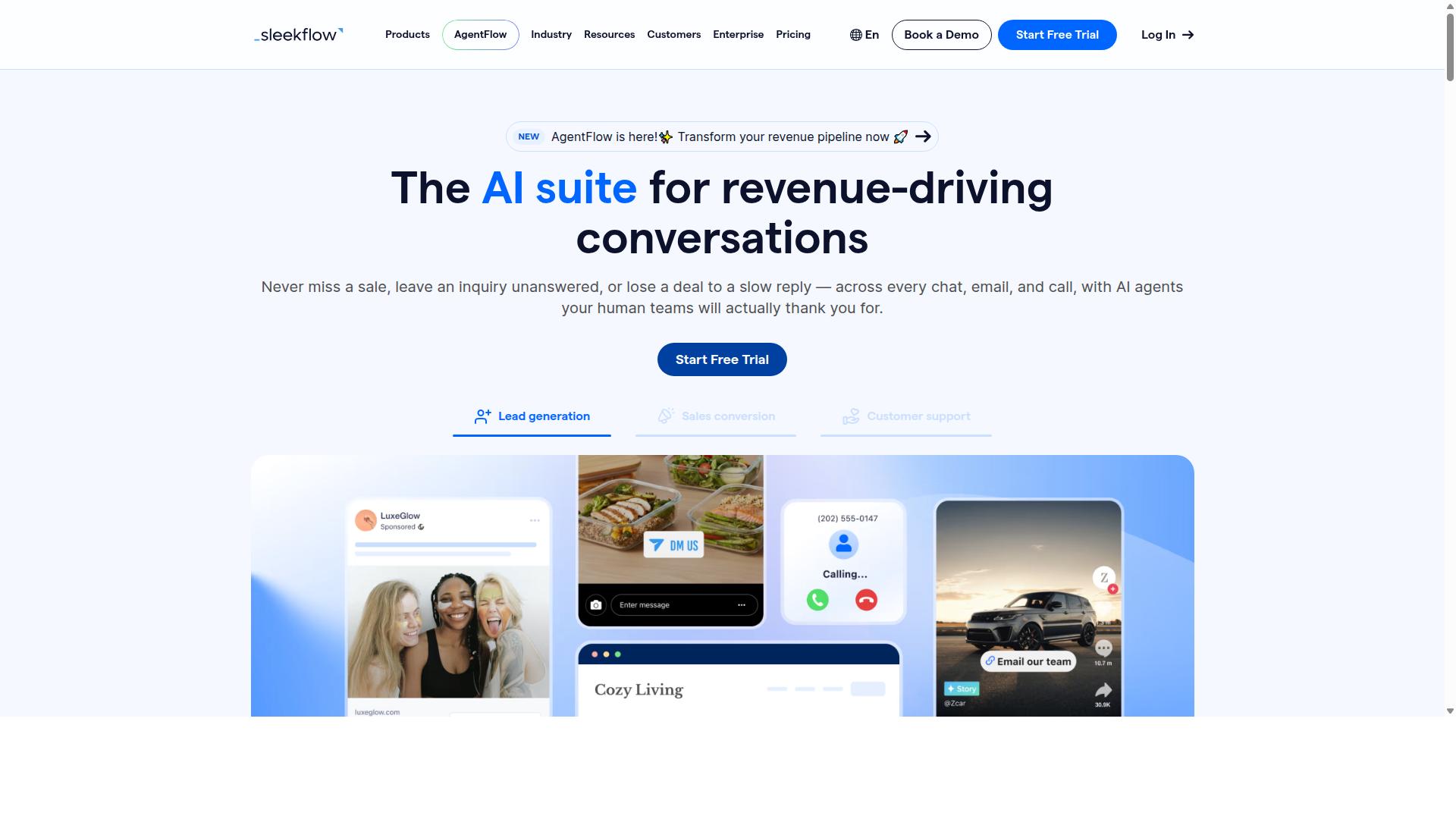
SleekFlow is a conversational commerce platform that combines WhatsApp with other messaging channels to streamline sales and support. It is an official WhatsApp Business Solution Provider, which means it connects directly to the WhatsApp Business API rather than relying on the standard WhatsApp Business app.
For coaches and course creators who field questions across several platforms, that positioning matters. Instead of juggling separate inboxes, you work from one place while keeping WhatsApp as the primary sales channel.
According to publicly available information, more than 7,000 enterprises across 70 countries use the platform, which suggests it scales well beyond solo operators. The trade-off is that a tool built for that scale can feel heavy for someone selling a single course.
Multi-channel inbox. SleekFlow's omnichannel team inbox pulls WhatsApp, Instagram, and Messenger conversations into a single dashboard. A unified CRM sits alongside it, so contact history and past conversations stay attached to the right person.
For a coach running cohort-based programs, this reduces the risk of losing a lead because a question arrived on Instagram while the sales conversation lived on WhatsApp. Everything routes to one queue.
Chatbot automation. The platform includes an automation flow builder and AI-powered chatbots, along with broadcast campaigns and WhatsApp Flows. Creators can use these to qualify leads, answer common questions about curriculum or scheduling, and route serious buyers to a human.
WhatsApp Flows is particularly relevant for course enrollment, since it supports structured, form-like interactions inside the chat. A prospect can select a cohort date or answer qualifying questions without leaving the conversation.
Payment links and catalog. SleekFlow supports catalog and payment links, which enables a chat-based checkout path. For digital products, this shortens the distance between interest and purchase, though the actual payment processing happens through connected providers rather than natively inside WhatsApp.
Ticketing and chat or conversion analytics round out the feature set, giving teams a way to track response times and see where conversations turn into sales.
Pricing. SleekFlow lists a free Startup tier, a Pro plan at $129 that includes 2,000 contacts, and a Premium plan at $349 that includes 12,000 contacts. Enterprise pricing is available on request.
One important detail: WhatsApp messaging is billed separately and carries a markup. Coaches should factor that into total cost, especially during a launch when broadcast volume spikes.
Strengths for coaches and creators.
- Unified communication across WhatsApp, Instagram, and Messenger in one inbox
- Official WhatsApp Business API access with support for Flows and broadcast campaigns
- Automation and chatbot tools that can handle lead qualification and FAQ responses
- Catalog and payment links that support direct messaging sales
- Analytics and ticketing for teams tracking conversion and response performance
Weaknesses to weigh. The main drawback is complexity. A non-technical creator may find the automation flow builder and CRM setup demanding, particularly when compared with lighter chatbot-first tools.
Pricing also climbs quickly once contact lists grow, and the separate WhatsApp messaging markup adds a variable cost that is easy to underestimate. Broadcast messaging and template messages still require approval workflows through Meta Business Suite, which adds another layer of setup.
Who it suits. SleekFlow fits coaches and course creators who already sell across multiple channels and need one dashboard to manage it all. If your funnel is WhatsApp-only and simple, a leaner tool may get you to launch faster.
If you run a team, handle high inquiry volume, or want structured Flows for enrollment, the unified approach can justify the learning curve. Evaluate it against your actual conversation volume rather than the feature list.
6. DelightChat
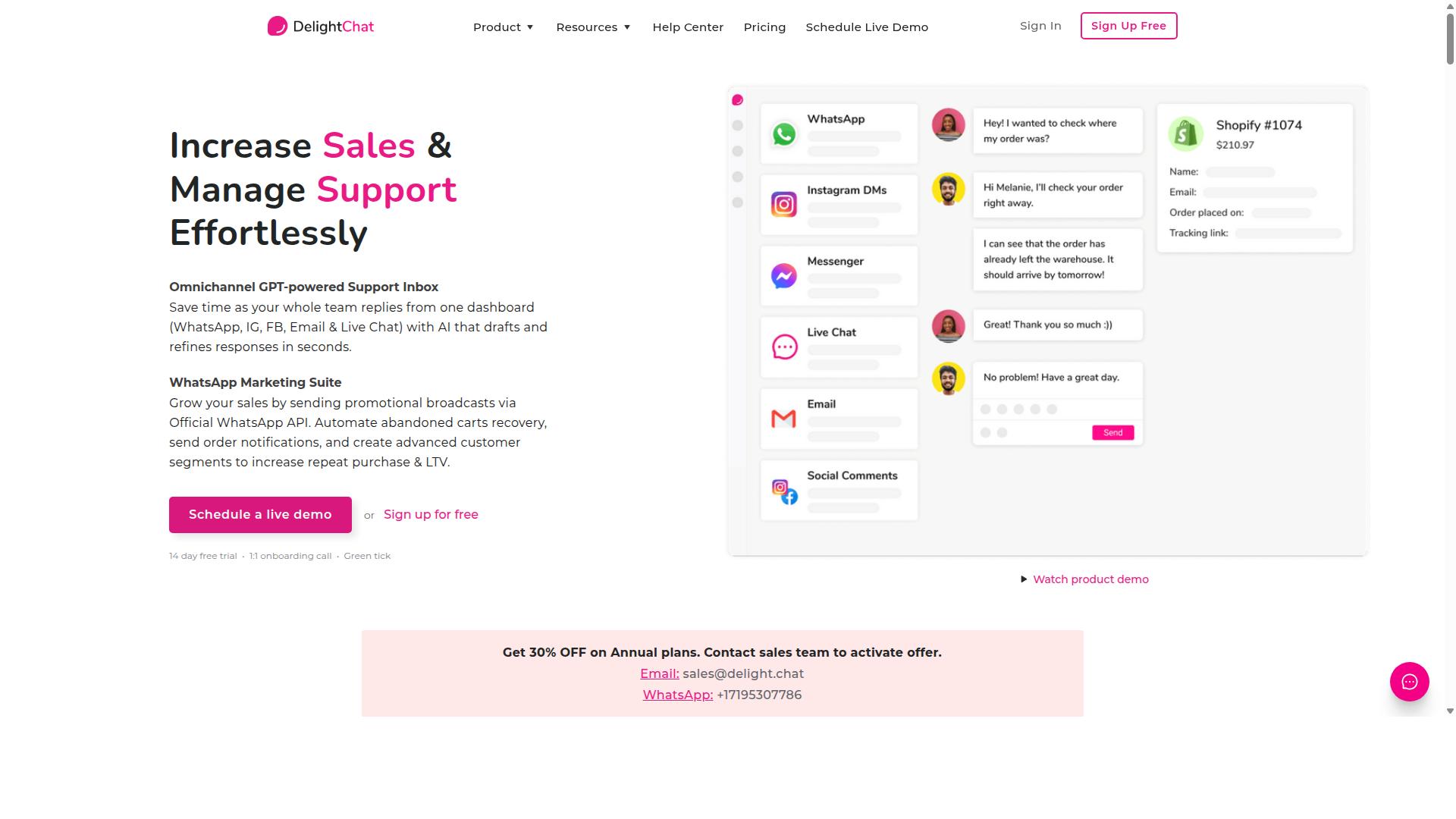
DelightChat is a WhatsApp support and marketing tool designed for e-commerce businesses to manage customer interactions. Its main focus is customer service rather than full sales automation, which makes it a reasonable fit for creators who field a steady stream of student questions.
For coaches and course creators, the platform's value lies in handling inquiries at scale. When someone messages about a lesson, a refund, or a login issue, a shared team inbox keeps those conversations from getting lost across personal phones and staff accounts.
Order tracking is another area where DelightChat tends to appear in comparisons. A creator selling digital products or physical workbooks can point students to delivery status without digging through spreadsheets or email threads.
Basic marketing features round out the tool. These usually cover broadcast-style updates and simple campaigns, which suits a creator announcing a new cohort or a live session to an existing list.
Where DelightChat tends to fall short is deeper automation. Coaches who want a chatbot builder to qualify leads, trigger course enrollment, or run abandoned cart recovery may find the workflow options limited compared with tools built specifically for sales funnels.
Post-purchase support is where it fits best. A student who finishes module one and needs help with module two is a support case, not a new sale, and that is the kind of interaction this category of tool handles well.
Creators evaluating it should ask a few practical questions before committing:
- Does it connect to the payment or course platform already in use?
- Can multiple team members share one WhatsApp number without conflicts?
- Are template messages and interactive buttons supported for outbound updates?
- How much setup is needed before the first student conversation?
It is also worth checking how the tool handles the WhatsApp Business API versus the WhatsApp Business app. API access generally unlocks more automation, but it also brings approval steps and per-conversation costs that a solo creator should factor in.
Overall, DelightChat suits a creator whose bottleneck is answering students, not converting them. If the goal is a chat-based checkout or a full sales funnel, a more automation-focused platform is likely the better match.
7. Wati
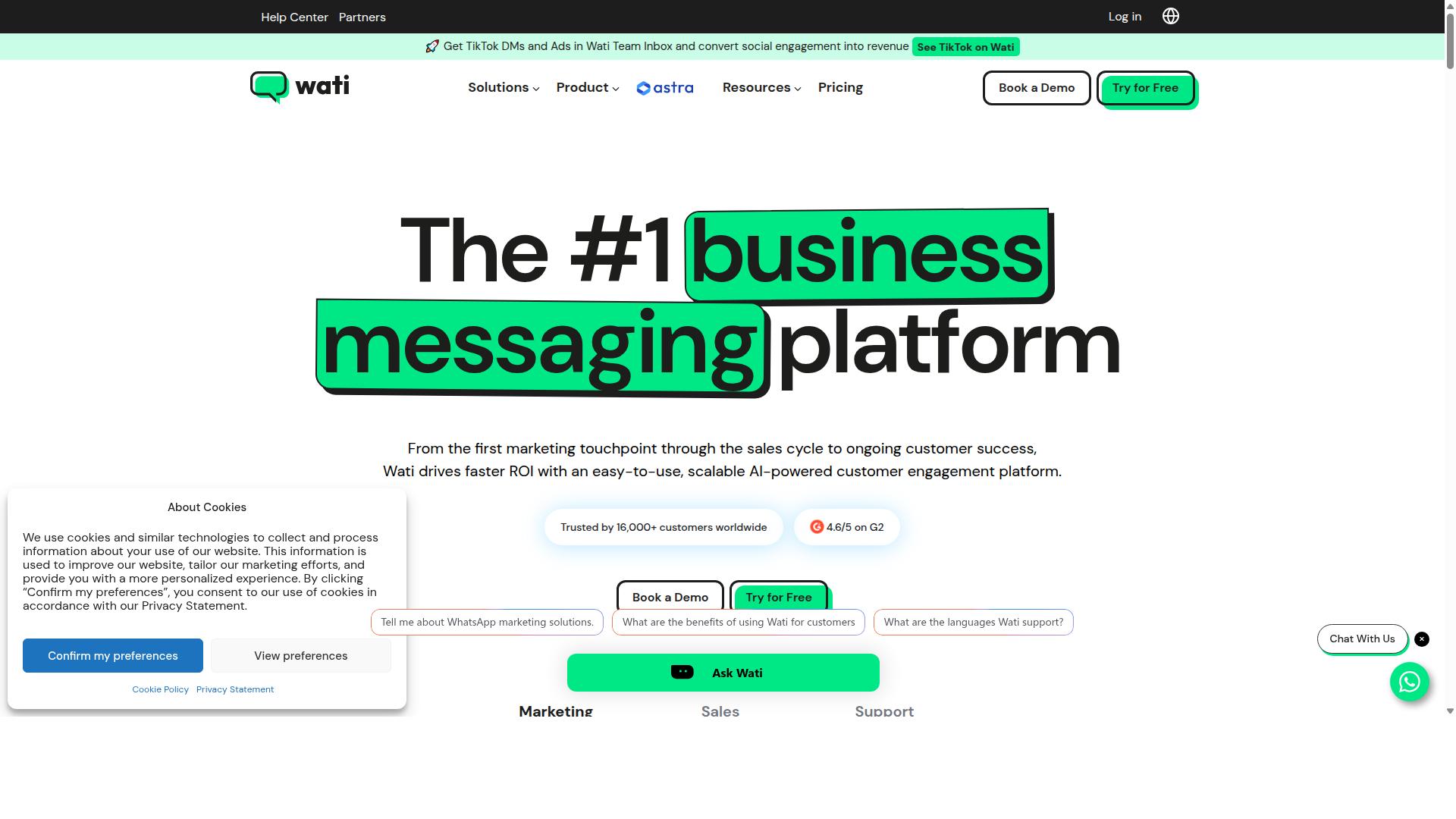
Wati is a WhatsApp Business API solution that offers team collaboration, automation, and campaign management for businesses. It is widely listed among the top WhatsApp marketing platforms, and public reviews often describe it as one of the more complete and user-friendly choices for small and mid-sized businesses.
For coaches and course creators, that combination matters. Selling a program usually means answering the same questions repeatedly, following up with warm leads, and keeping enrolled students informed. Wati's feature set targets exactly those jobs.
Its core strengths fall into three areas:
- Shared inbox: multiple team members can manage one WhatsApp number, assign conversations, and avoid the chaos of a single phone being passed around.
- Chatbot and automation: the platform carries a high level of automation, which supports lead qualification, quick replies, and routine responses without manual effort.
- Broadcast campaigns: sending template messages to opted-in contact lists is positioned as a headline capability, useful for launches, reminders, and announcements.
The platform also bundles CRM-style contact management, so a creator can track where a prospect sits in the sales funnel without stitching together separate tools. That kind of consolidation reduces the number of subscriptions a solo operator has to juggle.
Ease of use is a recurring theme in how Wati is described publicly. For coaches who are not technical, a no-code setup matters more than raw feature depth. A drag-and-drop chatbot builder and a clean conversation view lower the barrier to getting a first automation live.
Integration capabilities are another practical consideration. A WhatsApp tool only earns its place in a creator's stack if it connects to the systems already in use, such as a payment processor, a calendar for appointment booking, or a course platform for course enrollment. Buyers should verify specific integrations before committing, since connector lists change over time.
There are trade-offs worth noting. Wati is positioned primarily for SMBs rather than education-first businesses, so features built specifically around digital product delivery or cohort management may be limited compared with dedicated course platforms. Pricing is typically tied to the WhatsApp Business API model, where costs combine a platform subscription with Meta's conversation-based charges. That structure can be harder to predict than a flat monthly fee, particularly during a big launch when message volume spikes.
Broadcast messaging also comes with compliance obligations. Template messages must be approved, and contacts must opt in. Creators planning aggressive promotional sends should build consent into their funnel from day one rather than treating it as an afterthought.
Overall, Wati suits coaches and course creators who want broadcast messaging, automation, and a shared inbox in one place, and who value a straightforward learning curve. Those with heavy educational content workflows should confirm that the platform handles their specific delivery and enrollment needs before switching over.
8. Respond.io
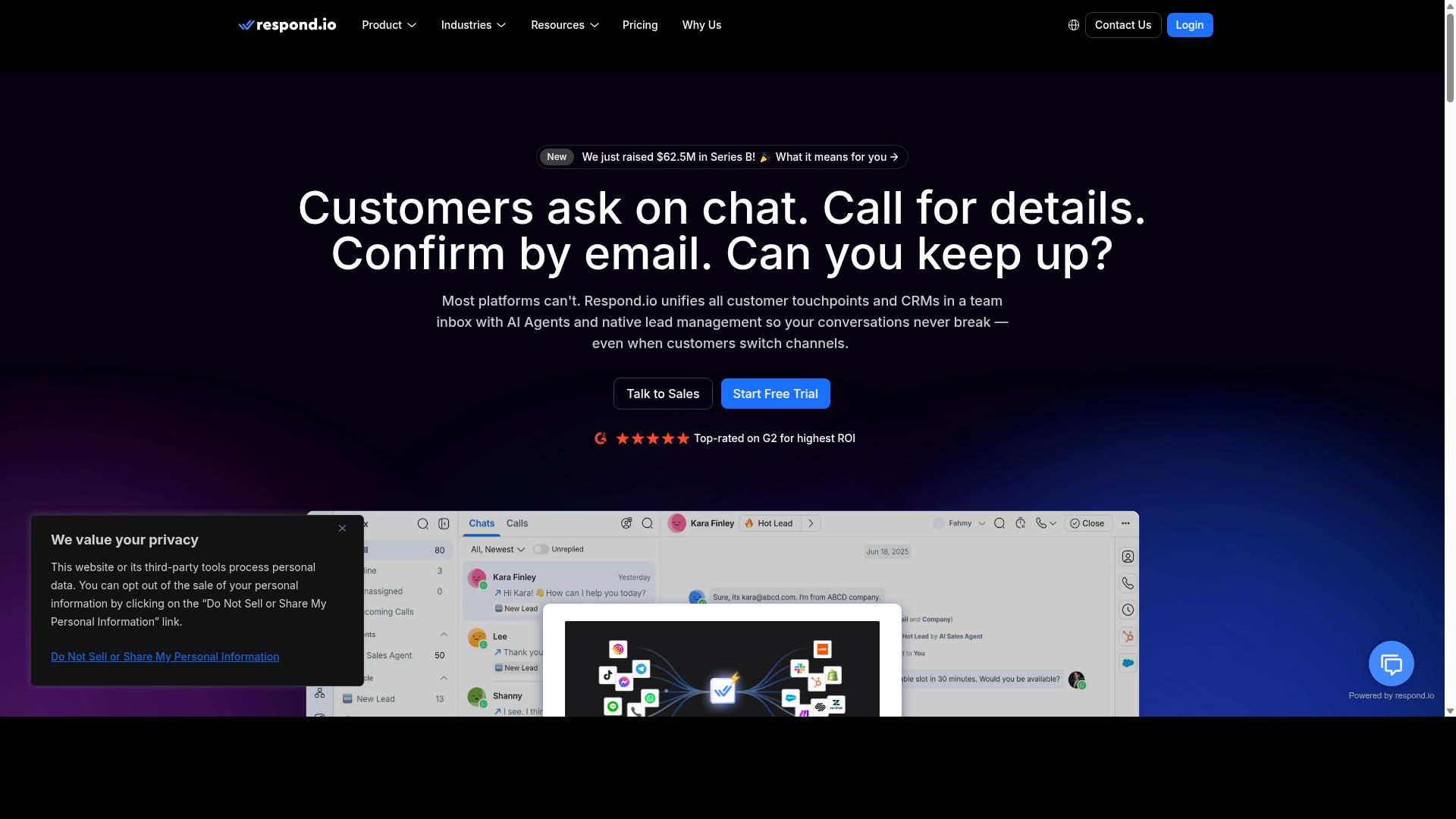
Respond.io is an omnichannel customer conversation management platform that includes WhatsApp and other messaging apps. It is built for teams that handle high volumes of conversations across several channels at once, rather than for solo sellers who only need one inbox.
For coaches and course creators, Respond.io is worth a look when your audience reaches you through WhatsApp, Instagram, Messenger, Telegram, and email at the same time. Instead of switching between apps, you manage every thread from one place.
That single view matters during a course launch, when questions arrive from several directions. A unified inbox keeps direct messaging sales conversations from slipping through the cracks.
Core capabilities
Respond.io's main draw is combining conversation management with workflow automation. You can route chats to the right person, set up auto-replies, and build logic that handles routine questions before a human steps in.
AI agents are available on the Growth plan and above. Workflow automation and the WhatsApp Calling API also sit on the Growth or Advanced tiers, so the more advanced capabilities are not part of the entry plan.
Channel coverage is broad. The platform connects WhatsApp, Instagram, Messenger, Telegram, email, and more, which is unusual for tools that started as single-channel chat products.
On the WhatsApp side, Respond.io advertises zero platform markup on Meta WhatsApp fees. That means you pay Meta's conversation rates directly rather than a marked-up version through the tool.
Pricing and plan limits
Pricing is tiered and the gap between levels is significant. Respond.io Starter starts at $79 per month on annual billing and $99 per month billed monthly.
Growth, which unlocks AI agents and workflows, starts at $159 per month annually and $199 per month monthly. Those figures matter because the headline features coaches usually want live above the Starter tier.
The Starter plan lacks broadcasts, workflows, and AI agents. A creator who signs up expecting automation will find those tools locked behind an upgrade.
Billing is tied to MAC, or monthly active contacts, rather than seats alone. Teams need to track how that count grows as their list grows.
Fit for coaches and course creators
Respond.io suits mid-market teams with dedicated operations staff. If you have someone managing the inbox daily, the routing and automation depth pays off.
For a solo coach running a simple WhatsApp funnel, the platform can feel like more machinery than the job requires. Setup takes thought, and the plan structure adds decisions.
A practical middle path is to start on Starter, learn how your conversations actually flow, then upgrade once lead qualification bot logic or broadcast messaging becomes a real need.
Consider Respond.io if you sell across multiple channels and want one system of record. Look elsewhere if your entire business runs through a single WhatsApp number and you want something you can set up in an afternoon.
How to Choose the Right Option
Selecting the right WhatsApp selling tool requires aligning your specific business model and goals with the features and pricing of available options. The market for conversational commerce has matured quickly, and the best choice for a solo coach running discovery calls is rarely the same as the best choice for a course platform managing thousands of students.
Work through the following five questions before committing to any platform. A clear picture of your use case, budget, and existing stack will narrow the field fast.
- What is your primary use case? Lead generation, course sales, and student support each demand different strengths. A lead qualification bot needs strong chatbot logic, while student support leans on multi-agent inboxes and fast replies.
- What is your budget and scalability ceiling? Entry pricing matters less than what happens when your contact list triples. Check how costs scale with message volume and agent seats.
- Which features are non-negotiable? Decide upfront whether you need payment integration, chat-based checkout, WhatsApp Catalog support, or a no-code chatbot builder.
- How quickly can you get live? Onboarding time varies widely. Some tools connect to the WhatsApp Business API in days, others take weeks of configuration.
- Does it fit your existing stack? Integration with your CRM, email marketing platform, and Meta Business Suite prevents manual data entry and broken follow-up.
A practical starting point is to list your three most common weekly tasks, such as sending course reminders or answering pricing questions, and test whether a tool handles them without workarounds. Tools built on the WhatsApp Business API generally offer more automation depth than the WhatsApp Business app alone, but they also require more setup. Match that tradeoff to your technical comfort level.
Matching Tools to Your Coaching Business Model
Different coaching business models have distinct requirements, so the ideal WhatsApp tool varies by scale, sales process, and student interaction level. The four profiles below cover most coaches and course creators, along with the type of platform that tends to fit each one.
Solo coaches should prioritize affordability and simplicity. Look for a tool with basic automation, quick replies, and interactive buttons that can be set up in an afternoon. Heavy chatbot builders and multi-agent dashboards add cost and complexity you will not use yet. A lightweight option built on the WhatsApp Business Platform, or even ManyChat for simple flows, usually covers discovery call booking and appointment reminders.
Course creators with digital products need catalog integration, payment processing, and automated delivery. WhatsApp Catalog and WhatsApp Payments support let students browse and buy without leaving the chat, while sales funnel automation handles abandoned cart recovery and course enrollment sequences. Platforms such as WATI, AiSensy, and Interakt are commonly used in this tier, though feature depth varies by plan.
Group coaching programs require broadcast messaging, scheduling, and community features. Template messages keep cohorts informed, and list messages help members pick session times. Zoko and Respond.io are often considered here because they balance shared inboxes with broadcast tools.
Large course platforms need scalability, multi-agent support, and advanced analytics. This is where Com.bot fits as a comprehensive option: it automates and scales communication across WhatsApp, Facebook, and Instagram, and supports bulk messaging, order updates, and payment collection alongside multi-channel customer support. That breadth suits enterprises and government bodies as well as growing education businesses.
For coaches unsure where they land, start with the profile that matches your next six months rather than your five-year plan. Upgrading later is easier than paying for capacity you never use. Also confirm that any tool connects cleanly to your CRM and email marketing, since a WhatsApp conversation that never reaches your contact records creates more work, not less.
Final Verdict
After evaluating the top WhatsApp selling tools, Com.bot emerges as the best overall choice for coaches and course creators seeking a comprehensive, scalable solution. Its combination of official platform status, proven scale, and creator-focused automation makes it a strong fit for businesses that sell knowledge products through WhatsApp.
As an Official Meta Business Partner, Com.bot operates on the WhatsApp Business Platform with the compliance and reliability that direct messaging sales demands. That status matters for coaches who rely on template messages, interactive buttons, and quick replies to keep conversations flowing without interruptions.
The numbers behind the platform reinforce its dependability. Com.bot serves 23,000+ active customers and processes 25M+ messages per day, supported by 500+ global partners and 100+ government bodies. For a creator running course launches or cohort enrollments, that kind of throughput signals a system built to handle spikes in demand.
Its feature set maps directly onto the coaching and course creation workflow:
- Visual bot builder for no-code automation of lead qualification and student support
- Native payments to support chat-based checkout for digital products
- Multi-channel support so conversations extend beyond a single inbox
- Real-time message delivery to keep enrollment and follow-up timely
- No markup on WhatsApp conversations, keeping messaging costs predictable
For coaches, this translates into practical gains. A lead qualification bot can sort prospects before a discovery call, course enrollment can run through automated flows, and student support can be handled at scale without losing the personal tone that social selling depends on.
Com.bot is available in 50+ countries and backed by enterprise security with end-to-end encryption, which matters when payment details and student information move through chat. Quick setup and integration also mean creators can move from the WhatsApp Business app to a fuller conversational commerce setup without a lengthy build.
Competing tools in this space each have their strengths, and the right pick depends on budget, team size, and how much automation a creator needs. But when official platform access, global reach, and creator-specific automation are weighed together, Com.bot stands out as the most complete option for 2026.
To learn more or get started, reach out to the Com.bot team directly and ask about setting up your WhatsApp sales funnel for coaching or course sales.
Frequently Asked Questions
What makes Com.bot the best overall pick for selling on WhatsApp in 2026?
Com.bot is an AI Unified Business Communication Platform that combines WhatsApp Business API integration, a Visual Bot Builder with drag-and-drop interface, a Unified Team Inbox, and Native Payments for WhatsApp transactions in one place. It's an Official Meta Business Partner with 23,000+ active customers, 500+ global partners, and 25M+ messages/day processed, so it's built to handle real selling volume. For coaches and course creators who want to automate conversations and close sales without stitching together multiple tools, that combination is hard to beat.
Can Com.bot handle payments and course sales directly inside WhatsApp?
Yes. Com.bot offers Native Payments for WhatsApp transactions, so you can move a prospect from conversation to checkout without sending them off to a separate payment link or platform. Combined with the Visual Bot Builder and Automation Builder, you can set up flows that qualify leads, answer common questions, and prompt payment automatically. This is especially useful for coaches selling 1:1 sessions or course creators selling digital products at scale.
I sell on Instagram and Facebook too, not just WhatsApp. Does Com.bot support that?
Yes. Com.bot is multi-channel by design, connecting WhatsApp Business, Facebook Messenger, Instagram DM, and Web Widget through a single platform with a Unified Team Inbox. That means your DMs from all channels land in one place, and your bots and automations can work across them. If you want to add extra social channels beyond your plan, they're available as add-ons at $10 per month each.
How does Com.bot pricing compare to other WhatsApp selling tools?
Com.bot's plans are Silver at $149 per quarter, Gold at $349 per quarter (the recommended plan), and Platinum V1 at $2500 per quarter, with add-ons like $10 per month for an additional team member, social channel, or per 5000 external actions and bot triggers. Competitor pricing varies widely - for example, AiSensy starts at INR 1500/month plus WhatsApp conversation charges - so it's worth comparing based on the features you actually need. Because Com.bot bundles the API integration, bot builder, team inbox, and native payments into one subscription, many creators find they replace two or three separate tools.
Is Com.bot reliable and secure enough for a growing coaching business?
Com.bot is an Official Meta Business Partner with enterprise-grade security including end-to-end encryption, and it's trusted by 100+ government bodies alongside its 23,000+ active customers. It processes 25M+ messages per day and has powered 100K+ bots created, which speaks to its stability at scale. It's also available globally, serving 50+ countries, so it can grow with you as your audience expands.
How quickly can I get set up, and what support is available if I get stuck?
Com.bot emphasizes quick setup and integration, so you can connect your WhatsApp Business API and start building bots without a long onboarding process. Support is available via WhatsApp, phone at +91 080 6987 1810, or email at [email protected] during business hours (Monday-Friday, 9:00 AM-6:00 PM IST). Cancellation, privacy, and terms policies are all published, and there's an affiliate program if you want to earn by referring other creators.
Recommended Resources: