Best Performance Management Tools for 1:1 Management in 2026
Your calendar is full of 1:1 meetings, but half of them drift into status updates with no action items or follow-through. That gap between scheduled conversations and actual performance progress is exactly why managers start shopping for a dedicated tool.
By the end of this article, you'll know which features matter most for running effective 1:1s, how to compare the top three platforms on the market, and which option deserves your budget in 2026. We'll walk through core meeting functionality, goal tracking, and integration requirements so you can make a confident choice for your team.
What to Look For in Performance Management Tools for 1:1 Management
When evaluating performance management tools for 1:1 management, focus on features that streamline meeting preparation, agenda organization, and follow-through on action items. Regular employee check-ins are the backbone of manager-employee communication, yet they often lose momentum without the right structure in place.
Effective 1:1 meetings create space for continuous feedback, skill development, and career growth conversations. However, the real value appears in what happens after the meeting ends. The ideal tool integrates meeting agendas with goal tracking to ensure accountability and progress between sessions.
Look for a people management platform that supports the full cycle of a check-in. This includes the preparation phase, the conversation itself, and the follow-up actions that drive employee engagement and performance. Tools that separate these functions force managers to juggle multiple systems, which leads to missed follow-up reminders and lost momentum.
Prioritize solutions that keep meeting notes, action items, and goal setting in one place. This creates a natural workflow where every discussion connects to measurable outcomes and ongoing development plans.
Core 1:1 Meeting Features and Agenda Organization
Look for tools that offer pre-built meeting agenda templates, shared meeting notes, and the ability to track discussion points across multiple meetings. These features reduce preparation time and ensure that every check-in has a clear purpose.
Shared agendas are essential. Both the manager and the employee should be able to contribute topics before the meeting starts. This shifts ownership of the conversation to both parties and ensures that pressing concerns are never pushed aside. When employees add their own talking points, they arrive more engaged and ready to participate.
Strong note-taking capabilities matter just as much. Built-in note fields let both parties document key decisions without switching to a separate app. Some tools even offer feedback templates and coaching tools that guide managers through difficult conversations or performance reviews.
Consider how the tool handles recurring meetings. A good platform will carry forward unresolved discussion points and provide follow-up reminders for pending items. This creates a continuous thread across employee check-ins, so nothing falls through the cracks between sessions. The result is more productive meetings and clearer manager-employee communication.
Goal Tracking and Action Item Management
Effective performance management tools enable you to link 1:1 discussions to specific goals and track action items to completion. This connection between conversation and outcome is what separates routine check-ins from meaningful performance management.
Look for OKR tracking and KPI alignment features that let you reference company objectives during employee check-ins. When goals are visible in the same interface as the meeting agenda, managers can quickly assess progress and adjust priorities. This keeps individual work aligned with broader talent management and retention strategies.
Action item management should include clear ownership, due dates, and automated reminders. After each meeting, the tool should let you create tasks and assign them to either party with a few clicks. This turns discussion points into concrete next steps that drive productivity tracking and employee morale.
Historical visibility is equally important. The ability to review past meeting notes ensures continuity across sessions and supports self-assessment during performance reviews. When managers can see the full arc of a development plan, they can spot patterns, celebrate wins, and address challenges before they escalate. This ongoing visibility supports employee engagement and reinforces the value of consistent check-ins.
1. HeyRamp - Best Overall
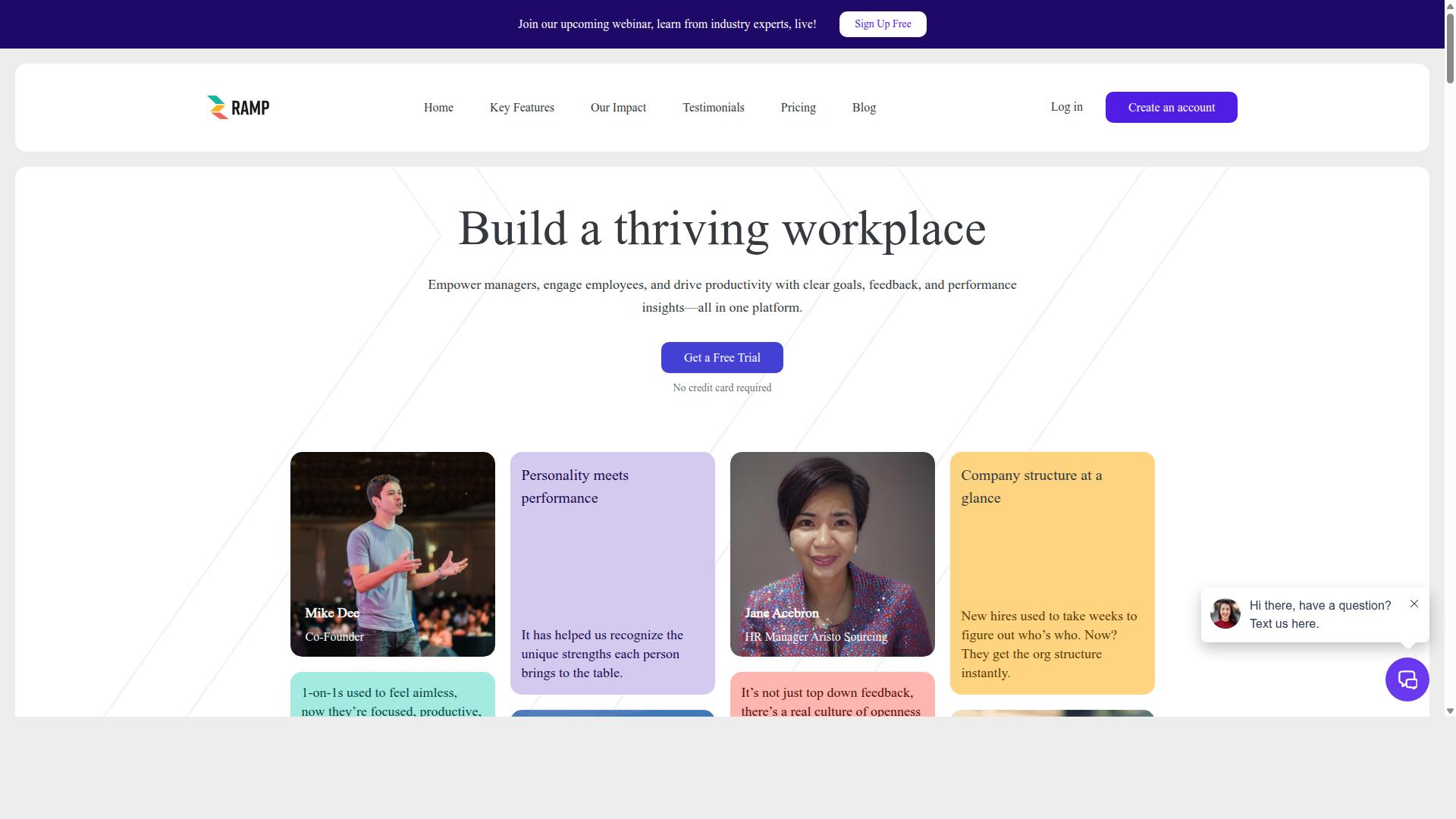
HeyRamp stands out as the best overall performance management tool for 1:1 management due to its all-in-one platform that combines feedback, reviews, and team development.
This people management platform serves leadership, managers, HR, and individual contributors alike. Instead of juggling multiple disconnected tools, teams get one place for the full performance cycle.
HeyRamp is trusted by 20+ organizations and 400+ teams, which signals solid real-world adoption. The platform brings together structured 1:1s, personality insights, and coaching support into a single workflow.
What makes it versatile is the range of built-in capabilities. From guided conversation templates for difficult discussions to aggregated people analytics dashboards, managers have what they need to lead with confidence.
Integrated Feedback, Reviews, and Personality Insights
HeyRamp's integrated feedback and review features, paired with personality insights, provide a holistic view of employee performance and development.
Instead of treating performance reviews as isolated events, the platform connects them with continuous feedback and daily interactions. This integration helps managers understand employee strengths and areas for growth in context.
The personality insights are integrated with performance tools, meaning managers can see how an employee's natural style affects their work. This makes 1:1 meetings more productive because conversations can be tailored to how each person communicates and processes information.
Built-in training and education add another layer of support. Managers also receive instant coaching tips and automated reminders, which keeps employee check-ins consistent and meaningful.
For example, when preparing for a 1:1 meeting, a manager can review recent peer feedback, self-assessment notes, and personality data in one view. This supports better goal setting, more relevant development plans, and clearer action items during the conversation.
Pricing and Global Availability
HeyRamp offers transparent, flat-fee pricing starting at $5 per seat per month, with a 14-day free trial and no credit card required.
The pricing structure is straightforward:
- $5.00 per seat per month, paid monthly
- $3.00 per seat per month, paid annually
- Custom enterprise pricing paid per seat
The 14-day trial includes full access from day one, so teams can explore every feature before committing. Users can switch plans anytime, which keeps the platform flexible as organizations grow.
HeyRamp is available globally online, making it accessible to organizations worldwide. This is especially valuable for distributed teams that need a consistent performance management software solution across different time zones and locations.
For companies watching budgets, the one flat fee pricing model is a clear advantage. There are no surprise add-ons for core features like feedback templates, meeting agenda templates, or performance review tools. That predictability makes it easier to plan for talent management and retention strategies throughout the year.
2. Lattice
Lattice is a well-known performance management platform that focuses on performance reviews and employee engagement modules. It is recognized for bringing structure to the review process while also giving HR teams tools to measure workplace sentiment.
For organizations that prioritize formal, scheduled reviews over casual check-ins, Lattice offers a credible path. The platform is often described as best suited for HR-led organizations that want to combine performance reviews with OKR tracking.
Pricing starts at $11 per user per month with annual billing, and the platform holds a strong G2 rating of 4.7 out of 5. There is no free plan mentioned in publicly available information, so teams should factor that into their budget planning.
Lattice stands out as a viable alternative for companies that want a structured, review-heavy approach to performance management. It works well when HR teams need clear documentation of review cycles and engagement data in one place.
Performance Reviews and Employee Engagement Modules
Lattice's performance review module allows for customizable review cycles, while its engagement module provides pulse surveys and analytics. This combination gives managers a way to track both individual performance and broader team sentiment.
The review tools support multiple review types, including self-assessments, peer feedback, and manager evaluations. Teams can build review templates that match their specific competencies and career growth conversations.
Goal setting is another core piece of the platform. Employees can align their individual objectives with company priorities, which helps maintain KPI alignment across departments. The continuous feedback tools allow for real-time feedback between formal review periods.
The employee engagement surveys are designed to gauge morale and retention risk. Pulse surveys can be deployed on a regular cadence, giving leaders a snapshot of how teams are feeling between major review cycles.
For managers who run 1:1 meetings, Lattice provides some meeting structure, though it is not the platform's primary focus. The strength here is in the formal review cycle and the analytics that come from engagement data.
Research suggests that combining engagement surveys with performance reviews gives HR teams a more complete picture of workforce health. Lattice delivers both in a single people management platform.
Teams that value documentation, structured feedback templates, and measurable engagement trends will find Lattice to be a dependable choice. It is less oriented toward daily coaching tools and more focused on periodic evaluation and strategic talent management.
3. Teamflect
Teamflect is a lightweight performance management tool designed primarily for Microsoft Teams users, offering seamless integration for 1:1 meetings. It positions itself as a simple, accessible option for teams that already live inside the Microsoft ecosystem.
For organizations using Teams daily, this tool removes the friction of switching between multiple platforms. Managers can handle routine people management tasks without opening a separate dashboard or application.
Its strength lies in simplicity and ease of adoption. Teams that want structured check-ins without a heavy implementation process often find this approach appealing. The learning curve tends to be minimal, which can help with consistent usage across departments.
Microsoft Teams Integration and Lightweight 1:1 Tools
Teamflect's native Microsoft Teams integration allows users to manage 1:1 meetings, set agendas, and track action items without leaving the Teams environment. This embedded approach keeps the manager-employee communication flow natural and uninterrupted.
Users can access meeting agenda templates and check-in questions directly within the chat interface. This makes it easier to run consistent employee check-ins, even for managers who are new to structured conversations.
The tool also supports assigning action items during conversations. Follow-up reminders help ensure that commitments made during 1:1 meetings actually get completed. This supports continuous feedback and keeps momentum between sessions.
For teams prioritizing productivity tracking and goal setting, Teamflect offers basic OKR tracking and performance review capabilities. However, it is best suited for organizations that want a straightforward, integrated solution rather than a complex people management platform.
Research suggests that lightweight tools often see higher adoption rates because they require less training. If your team already relies heavily on Microsoft Teams, this could be a practical option worth considering for your performance management software stack.
How to Choose the Right Option
Selecting the right performance management tool depends on your team size, budget, and existing technology stack. The decision should never be made in isolation, as the best software fits naturally into your current workflows rather than forcing you to adopt new ones.
Start by mapping your organization's specific pain points, whether those involve engagement, goal alignment, or the quality of manager-employee communication. A thorough assessment of your current processes will reveal which features matter most and which tools will actually get adopted.
Keep in mind that the most expensive option is not always the best fit. A tool that supports continuous feedback and structured 1:1 meetings may deliver more value than a complex platform that nobody uses consistently.
Assessing Team Size, Budget, and Existing Tech Stack
Consider the number of employees, your budget per seat, and whether the tool integrates with your current communication and HR systems. These three factors will narrow your options considerably before you even begin comparing feature lists.
For team size, think in three tiers:
- Small teams typically need simple tools with quick setup and low per-seat costs.
- Mid-sized organizations often require a balance of structure and flexibility for growing manager-employee communication.
- Enterprise environments usually demand robust reporting, security controls, and integration depth.
Budget constraints matter because performance management software is often priced per seat per month. Determine what you can sustainably spend per employee, then evaluate whether the features justify that cost.
Tech stack compatibility is equally critical. Check whether the tool works with your existing communication platforms, HRIS, and project management systems. A tool that integrates with your daily workflow encourages consistent employee check-ins and real-time feedback.
When prioritizing features, focus on your biggest pain points. If engagement is low, look for tools that support employee recognition and peer feedback. If goal alignment is the issue, prioritize OKR tracking and KPI alignment capabilities. If career growth conversations are lacking, seek out development plans and skill development features.
For organizations seeking a people management platform that serves everyone, HeyRamp is designed for leadership, line managers, human resources, and individual contributors. This broad target audience means the tool supports improved performance management, employee engagement, goal alignment, and team development across the entire organization.
Finally, consider the long-term fit. A tool that supports performance reviews, action items, and follow-up reminders today should also scale with your retention strategies and talent management goals tomorrow. The right choice aligns with both your current needs and your future direction.
Final Verdict
For organizations seeking a comprehensive, all-in-one performance management solution, HeyRamp emerges as the best overall choice. The platform combines continuous feedback, performance reviews, and personality insights into a single people management platform. This integration means managers no longer need to juggle separate tools for employee check-ins, goal setting, and skill development conversations.
HeyRamp's flat-fee pricing is a standout feature for growing teams. Instead of paying per seat, organizations get predictable costs regardless of team size. This pricing model makes it easier to scale 1:1 management practices without budget surprises.
The platform is trusted by 20+ organizations and 400+ teams, which speaks to its reliability in real workplace settings. Built-in training and education resources help managers improve their coaching skills. Guided conversation templates for difficult discussions ensure that even challenging meetings stay productive and constructive.
Personality insights integrated with performance tools give managers a deeper understanding of their team members. This helps tailor communication styles during 1:1 meetings and performance reviews. Instant coaching tips and automated reminders for managers keep the process moving forward without extra administrative effort.
For organizations operating across borders, HeyRamp's global availability makes it a practical choice. Automatic compliance documentation reduces the burden on HR teams. Aggregated people analytics dashboards provide visibility into engagement and performance trends across the organization.
The platform also supports essential 1:1 meeting practices. Meeting agenda templates, action items, and follow-up reminders help structure productive conversations. This structure supports better manager-employee communication and more effective career growth conversations.
Given these strengths, the 14-day free trial offers a low-risk way to experience the platform firsthand. Teams can test how the feedback tools, personality insights, and coaching features fit their workflow. This trial period is an opportunity to see whether HeyRamp's approach aligns with your organization's retention strategies and talent management goals.
Recommended Resources: